
我们的公司
Fatigue Testing vs. Static Strength: Why Transmission Components Are More Prone to Misjudgment? Section2
博客

Fatigue Testing vs. Static Strength: Why Transmission Components Are More Prone to Misjudgment? Section2

Fatigue Testing vs. Static Strength: Why Transmission Components Are More Prone to Misjudgment? Section2

March 25, 2026

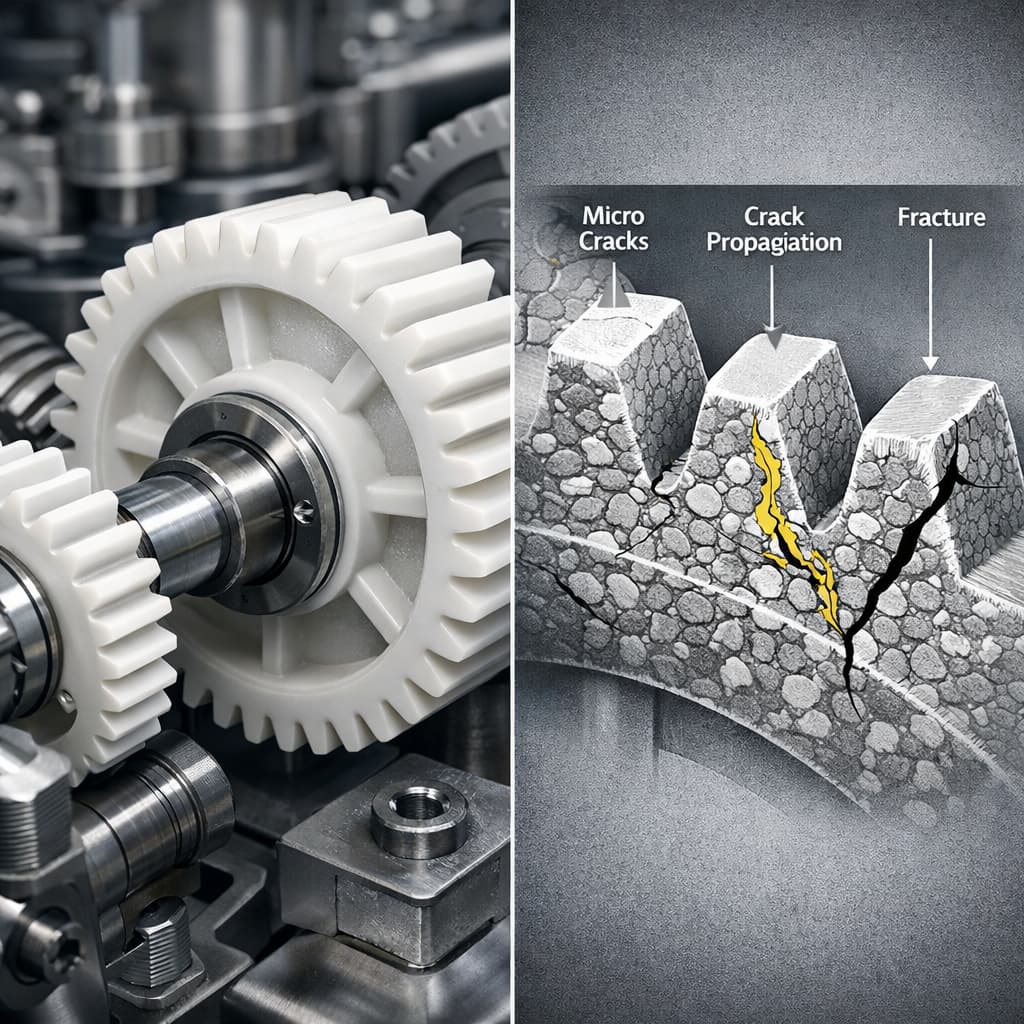
Fatigue performance is typically evaluated using S-N curves, which represent the relationship between stress amplitude and the number of cycles to failure. Compared with metals, polymer S-N curves are often steeper, meaning a small increase in stress may drastically shorten service life. Therefore, designs relying solely on static strength rarely reflect long-term reliability.

Successful engineering practices often evaluate three parameters simultaneously: static strength, fatigue limit, and creep behavior. For example, some robotic transmission systems use higher fiber-content materials such as PA66 GF50, combined with structural optimization to reduce stress concentration. In addition, fatigue testing exceeding 10⁷ cycles is often performed during development to validate durability.

Experience suggests that in continuous transmission applications, strength parameters alone are insufficient for reliable material selection. Fatigue testing data should be introduced during the early material selection stage, and lifetime evaluation should reflect actual operating conditions. For modified nylon materials, factors such as fiber content, interface compatibility, processing orientation, and environmental humidity can significantly influence fatigue performance.

Ultimately, reliable engineering decisions require understanding how materials behave under long-term cyclic stress rather than relying solely on static strength values.

fatigue performance

留言

留言
如果您对我们的产品感兴趣并想了解更多详细信息,请在此处留言,我们会尽快回复您。
提交

产品

WhatsApp

接触