
我们的公司
Which Nylon Test Data Are Most Commonly Misinterpreted During Material Selection? Section1
博客

Which Nylon Test Data Are Most Commonly Misinterpreted During Material Selection? Section1

Which Nylon Test Data Are Most Commonly Misinterpreted During Material Selection? Section1

March 04, 2026

In engineering plastic selection, test data are often regarded as the most objective and reliable basis for decision-making. Yet in real projects, rework and field failures caused by correct data but wrong material choiceare far from rare. The issue does not lie in the tests themselves, but in misunderstandings of test conditions, data boundaries, and engineering relevance.

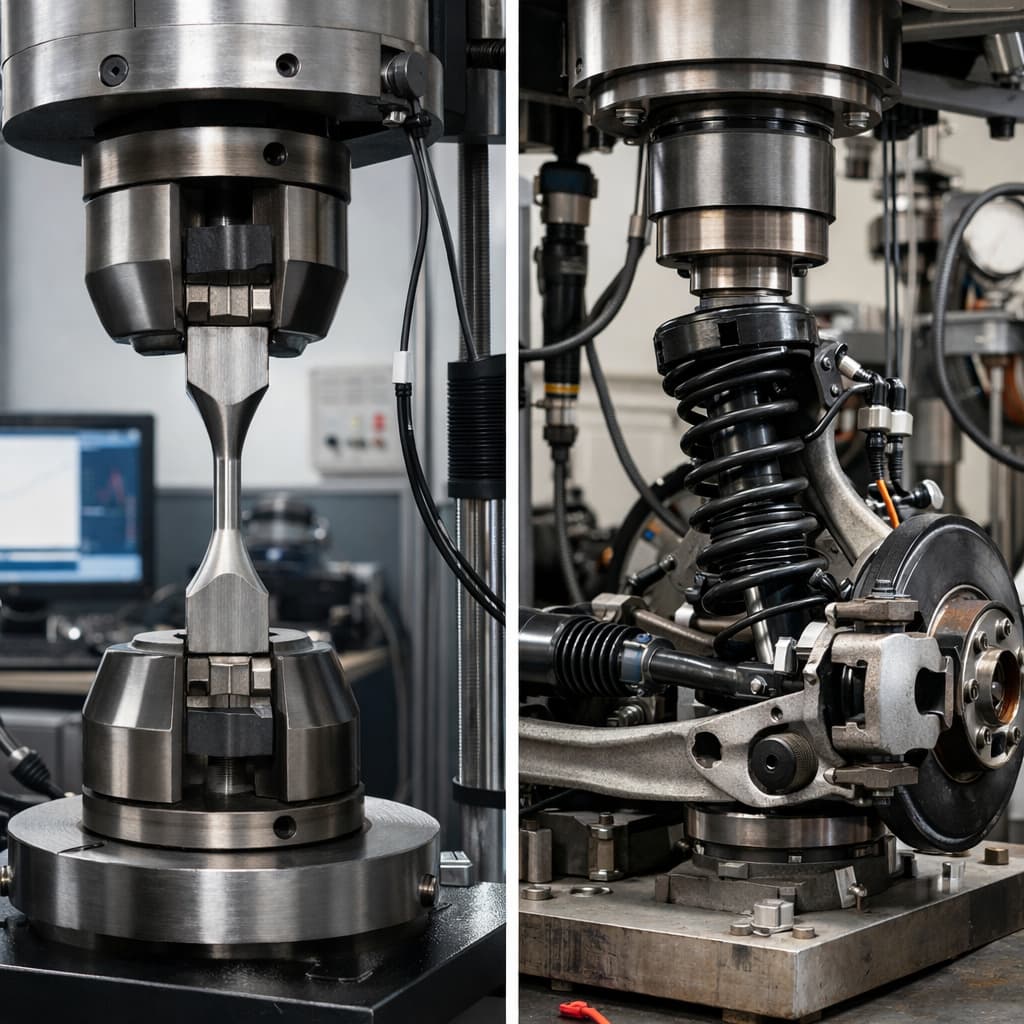
Tensile and flexural strength values are among the most frequently misinterpreted data points. Standard tests are conducted at 23°C and 50% relative humidity, while nylon materials are highly sensitive to temperature and moisture. Under high humidity or elevated temperature, mechanical strength can decrease by more than 30 percent. Many failure cases show that using dry-as-tested data directly for structural calculations leads to unexpected deformation or fracture in service.

Heat deflection temperature is another parameter often taken out of context. HDT values are measured under specific loads and heating rates and are intended for comparative purposes. In real applications, components are typically subjected to long-term static loads or cyclic stress. When operating near the HDT, nylon materials may experience significant creep deformation, even if the temperature never exceeds the test value. Over time, this can result in dimensional instability and functional failure.

Comparison of Combustion Behavior Between UL94 Standard Specimens and Actual Electronic Components

留言

留言
如果您对我们的产品感兴趣并想了解更多详细信息,请在此处留言,我们会尽快回复您。
提交

产品

WhatsApp

接触