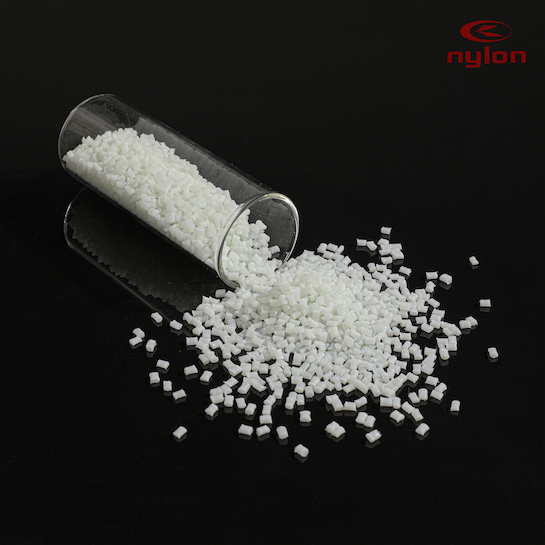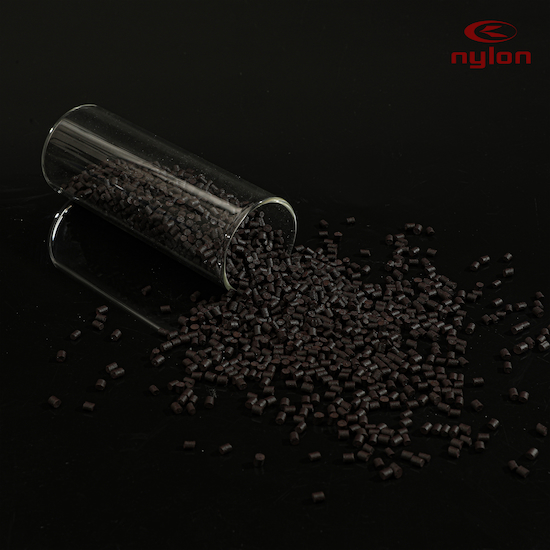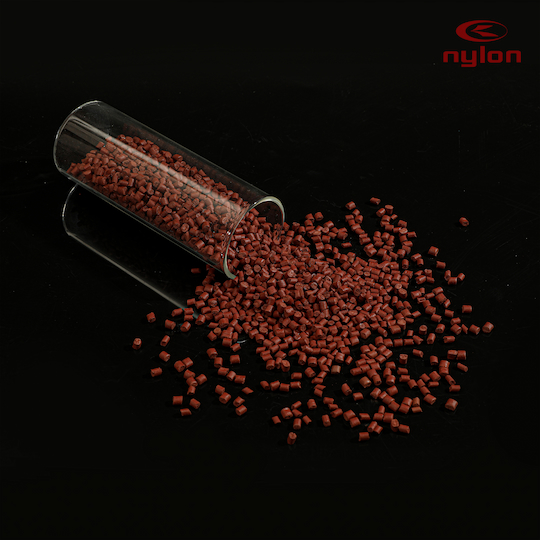

In the contemporary landscape where precision additive manufacturing converges with rigorous industrial applications, manufacturing enterprises utilizing Laser Powder Bed Fusion (LPBF) or Selective Laser Sintering (SLS) face a critical technical bottleneck in transitioning from rapid prototyping to end-use production. For a significant period, Polyamide 12 (PA12) has dominated the industrial 3D printing domain due to its superior mechanical strength, dimensional stability, and high refresh rates. However, as advanced structural components in aerospace electronics, electric vehicle thermal management, and automated assembly lines under extreme environments demand multifunctional attributes, standard-grade PA12 powders increasingly reach their inherent physical limitations. B2B procurement professionals and engineering teams often encounter a dilemma where they require the fluid processability and interlayer adhesion of PA12 but are forced to compromise by selecting traditional injection-molded composites or CNC-machined metal parts, sacrificing geometric freedom for specific functional profiles. The development of next-generation PA12 powder aims precisely to dissolve this boundary, imbuing the polymer matrix with electrical, thermal, and self-healing properties via specialized nanofillers and microstructural architecture without compromising additive flexibility.
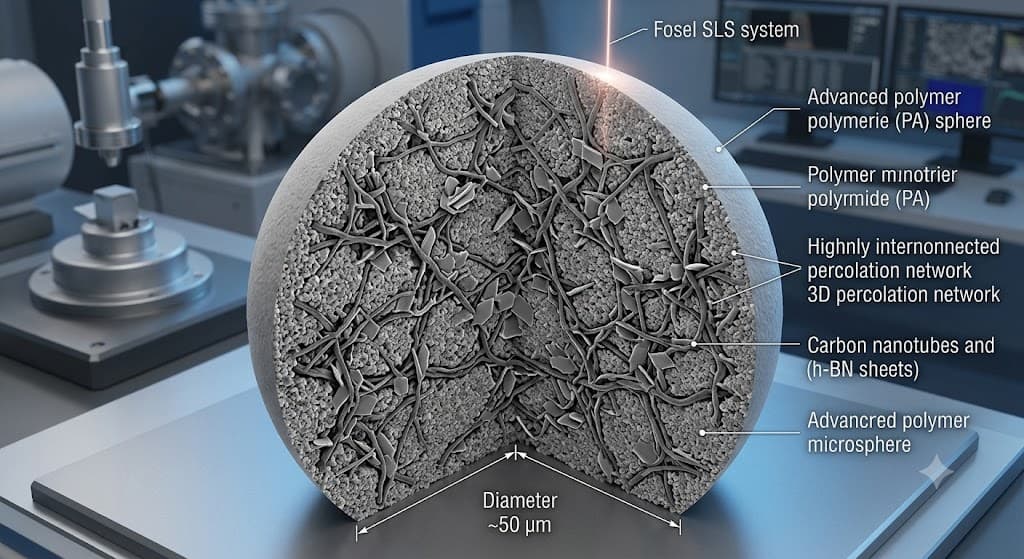
Within electronics manufacturing, semiconductor cleanroom operations, and aerospace fluid systems, electrostatic discharge (ESD) represents a latent yet destructive industrial pain point. Conventional PA12 components exhibit high electrical insulation, with surface resistivity typically exceeding 10 to the power of 12 ohms per square, rendering them highly susceptible to accumulating thousands of volts of static charge under high-pressure gas friction or mechanical contact. This accumulation threatens to break down sensitive integrated circuits or trigger catastrophic sparks in explosive environments. Historically, temporary topical anti-static coatings have been deployed, but these are prone to rapid delamination under persistent mechanical abrasion or chemical washing. Next-generation electrically conductive PA12 powder addresses this through advanced microscopic engineering, embedding high-aspect-ratio carbon nanotubes (CNTs), graphene nanoplatelets, or structured carbon black within individual polyamide microspheres. This methodology achieves a low percolation threshold, establishing continuous 3D electron transport paths along powder boundaries during sintering.